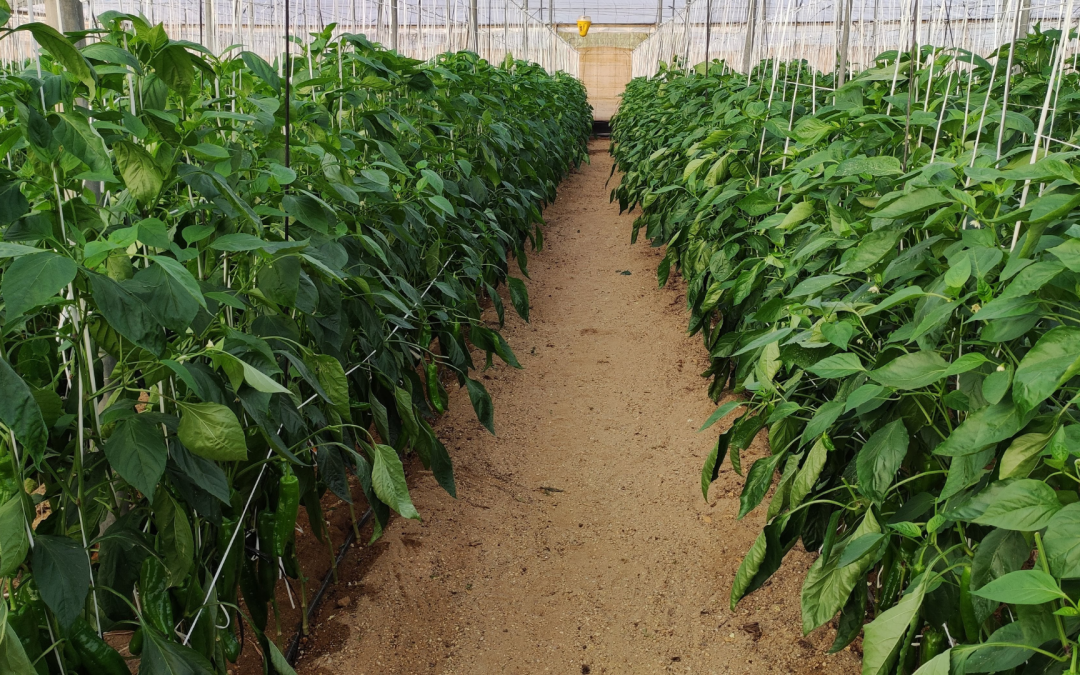
Almería will have 12,388 hectares dedicated to pepper cultivation this season,
across all varieties, a figure that represents a 2.5% reduction compared to
the previous season. This product continues to be the preferred crop for farmers
in solar greenhouses in the province, ahead of others such as cucumbers and tomatoes.
As in the previous season, Thrips parvispinus is having a very high
incidence, affecting the development of pepper crops and the visual appearance of the
products, despite increased prevention measures and
control methods, always prioritizing biological control and integrated pest management.
Its presence has been detected in 80% of the farms dedicated to this product, and although
the damage varies, the most common issue is the presence of marks and scars
on the fruit, to a greater or lesser degree. The most severe damage affects between 10 and
15% of the production. According to data provided by the Regional Ministry of Agriculture, Fisheries, Water and Sustainable Development, 1.5% of the 12,388 hectares planted have been uprooted this season.
These damages are purely cosmetic and do not impair the organoleptic characteristics of the affected peppers, much less pose any risk to consumer health.
The presence of Thrips parvispinus in pepper crops in the province of Almería dates back three seasons. Since then, the increase in weeks with above-average temperatures, as well as the high resistance of this pest, have favored its spread.
This invasive insect, originally from Asia, has moved from ornamental crops to horticultural crops, finding its preferred habitat in peppers.
As stated above, Thrips parvispinus poses no risk to consumer health. It is only recommended, as under normal circumstances, to wash the produce thoroughly before consumption—a standard hygiene practice for consuming fresh produce.
Marketing companies are working closely with producers, providing the crops with the best possible conditions, although despite this, the incidence of the pest remains high. Similarly, the best fruits are selected daily, without discarding those that only have scars or blemishes on the surface, as they are perfectly safe for consumption.
Our production, economic, and social model cannot afford to discard millions of kilos of top-quality peppers simply because they have marks or visual defects on their skin, which could be compared to the blemishes found on Canary Island bananas compared to regular bananas.
In a globalized world that prioritizes sustainability and opposes food waste, there is no room for debate about the commercial viability of peppers with the “Parvispinus blemish.”
Link to statements on the quality of Almería peppers by Antonio Mena, Territorial Delegate of Agriculture for the Regional Government of Andalusia: